
 how-to
How to Prevent Plumbing Leaks in Winter: Greer, SC Guide
Table of Contents
- Why Greer, SC Homes Face Hidden Winter Plumbing Risks
- Maintaining Consistent Indoor Temperature to Prevent Plumbing Leaks
- How to Insulate Pipes in Crawl Space and Other Vulnerable Areas
- Winterizing Outdoor Faucets and Hose Bibs Before the First Freeze
- Signs of a Frozen Pipe Before It Bursts: What to Watch For
- Smart Home Monitoring and Preventative Maintenance for Crawl Spaces
- Insurance, Liability, and When to Call a Professional
- Frequently Asked Questions
Last Updated: September 16, 2026
Why Greer, SC Homes Face Hidden Winter Plumbing Risks
Greer, South Carolina sits in a climate zone that lulls homeowners into complacency. Winters are mild enough that most assume their pipes are safe, but a hard freeze can still push overnight lows into the teens, and thousands of Upstate homes were never built for it. Learning how to prevent plumbing leaks in winter starts with understanding why this region is uniquely vulnerable.
We've responded to burst-pipe calls across Greer and the surrounding Upstate area, and the pattern is consistent: the homes that flood are rarely the ones with old plumbing. They're the ones whose owners assumed a South Carolina winter couldn't hurt them.
Two factors drive most winter pipe damage here.
Maintaining Consistent Indoor Temperature to Prevent Plumbing Leaks
The single most effective way to prevent plumbing leaks in winter is to stop your indoor temperature from dropping, because most pipe failures happen when interior spaces cool below freezing while homeowners are asleep or away.
A few practical adjustments make a real difference:
- Keep cabinet doors open under kitchen and bathroom sinks so warm room air reaches pipes along exterior walls.
- Leave interior doors open so heat distributes evenly.
- Seal gaps around exterior doors and windows near plumbing runs; drafts accelerate heat loss.
- During a hard freeze, let a thin trickle run from the faucet farthest from your main shut-off valve. Moving water resists freezing, and the trickle relieves pressure if ice begins to form.
- On a pier-and-beam foundation, the crawl space is not heated by your thermostat, so pair this step with crawl space insulation (covered below).
Smart thermostats and freeze alerts for Greer homes
A smart thermostat turns this rule into a system that acts on your behalf. Set a hard floor of 55°F in the app and enable freeze alerts, and it notifies your phone if the indoor temperature drops toward that threshold, usually meaning the furnace failed, the power is out, or a door was left open. For Greer rental property owners, that alert is often the first signal a tenant's heat has gone out.
What to do when you leave town
If you travel during the winter, do not simply lower the thermostat and hope. Two options work well in Greer:
- Keep the heat at 55°F and rely on alerts. Simplest approach, and it works for most homes with a functioning HVAC system.
- Shut off the main water supply and drain the lines. Safer for older pier-and-beam homes or any property where the heat is unreliable. Turn off the main valve, open the lowest faucet in the house, and let gravity do the rest. A pipe that contains no water cannot burst.
How to Insulate Pipes in Crawl Space and Other Vulnerable Areas
Insulating pipes in a crawl space is the highest-value winterization task for most Greer homes, because that's where the majority of unprotected plumbing runs sit.
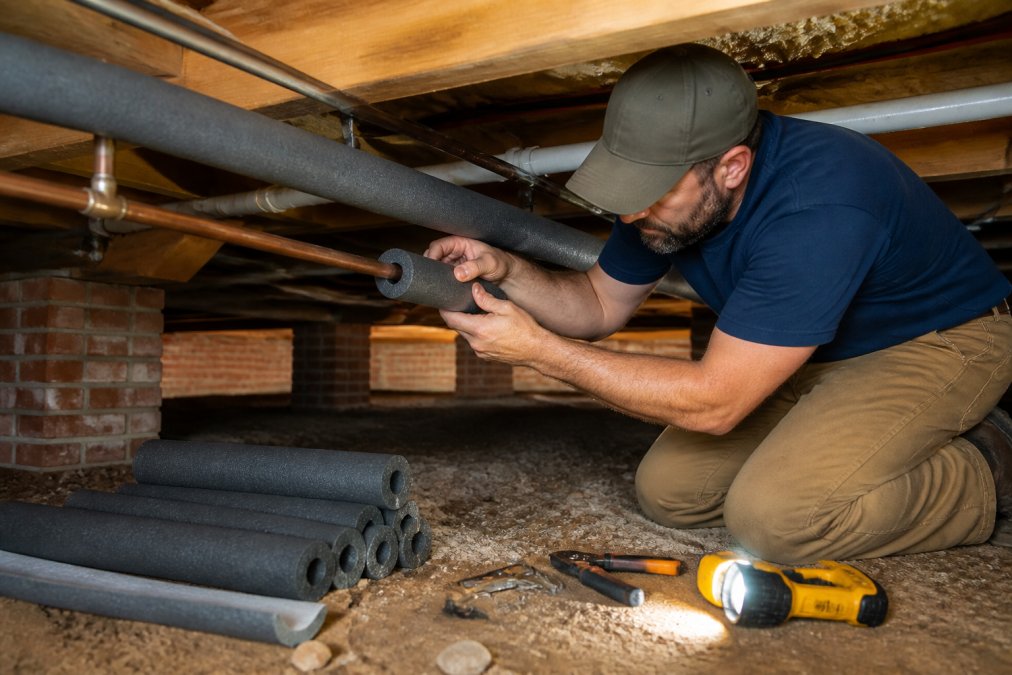
- Inspect and clean each pipe. Wipe away dust and check for corrosion or minor seepage before you cover anything up.
- Apply foam pipe sleeves. Slide pre-slit foam insulation over straight runs, pressing the seam closed.
- Wrap the joints and elbows. Foam sleeves leave gaps at fittings, and pipe joints are where ice expansion does the most damage. Wrap those spots with pipe wrap tape or fiberglass insulation.
- Seal the crawl space vents. Many pier-and-beam homes have open foundation vents that let freezing air blow across the pipes. Close or block them for winter, then reopen in spring to prevent moisture buildup.
- Insulate the crawl space floor and rim joists. This keeps ambient heat from escaping and raises the temperature around your plumbing.
Winterizing Outdoor Faucets and Hose Bibs Before the First Freeze
Winterizing outdoor faucets and hose bibs takes about fifteen minutes per fixture and prevents one of the most common and costly freeze failures on any property. In Greer, the deadline is the first hard freeze warning for the Upstate, typically between late November and mid-December, and once issued, you have a day or two at most.
The sequence matters. Work through it in this order:
- Disconnect every garden hose and store it indoors. A hose left attached traps water inside the faucet assembly, where it freezes and splits the pipe behind the wall.
- Shut off the interior valve feeding each exterior faucet, if your home has one. Many older Greer homes do not, which makes the remaining steps more important.
- Open the outdoor spigot to drain remaining water from the line.
- Install an insulated faucet cover over each hose bibb. These foam caps cost a few dollars and are the cheapest insurance you can buy.
- Check downspouts and exterior drains so meltwater has somewhere to go once the thaw arrives. A clogged downspout sends water against the foundation.
Do not forget the irrigation system
Greer homeowners with in-ground sprinkler or drip irrigation systems have a second outdoor freeze risk hose bibs don't cover. Water left in the zone lines, backflow preventer, and valves will freeze and crack components, and repairs often run into the hundreds of dollars.
Timing for Greer and the Upstate
Use the National Weather Service Greenville-Spartanburg office's freeze warnings as your trigger, not the calendar. The first Upstate freeze warning typically arrives in late November or early December, but has come as early as late October. Once issued, complete the hose bib and irrigation steps the same day, waiting until the weekend can mean waiting until after the damage is done.
Signs of a Frozen Pipe Before It Bursts: What to Watch For
Catching a frozen pipe early is the difference between a five-minute fix and a flooded floor. Watch for these indicators:
- Reduced or no water flow from a single fixture, which usually means ice has formed in that branch line.
- Frost visible on exposed pipe in the crawl space, basement, or under a sink.
- A faint smell of sewage or odd odors from drains, sometimes a sign of a blocked or freezing drain line.
- Bulging or discolored pipe surfaces, which indicate ice expansion has already stressed the material.
- Unexplained dampness on floors or walls near plumbing runs.
Smart Home Monitoring and Preventative Maintenance for Crawl Spaces
Smart home monitoring has changed how Greer homeowners manage winter plumbing risk, turning a once-invisible problem into an alert on your phone.
A basic setup includes three inexpensive devices:
- A Wi-Fi temperature sensor placed in the crawl space or basement, set to alert you when the temperature drops toward freezing.
- A water leak sensor near the water heater, washing machine, and sump pump, which catches drips before they become damage.
- A smart thermostat that maintains your minimum temperature setting and notifies you if the system fails while you're away.
Insurance, Liability, and When to Call a Professional
Most standard homeowners insurance policies cover sudden and accidental water damage from a burst pipe, but they typically exclude damage the owner could have prevented through reasonable maintenance.
Call a professional when:
- You find a pipe that has already burst or is actively leaking.
- Water flow is lost across multiple fixtures, which points to a main line problem.
- You smell gas or see water near your electrical panel.
- Your main shut-off valve won't close.
- The crawl space shows standing water or signs of a failing sump pump.
Frequently Asked Questions
At what temperature should I let my faucets drip in Greer, SC?
When overnight temperatures are forecast to drop to 20°F or below, let the faucets on exterior walls drip at a slow trickle. Greer typically sees its coldest nights in January, with lows that can reach the teens. The moving water relieves pressure inside the pipe, which is what actually causes a burst. A pencil-thin stream is enough; you do not need to run faucets full open.
How do I insulate pipes in a crawl space?
Start by sealing foundation vents and any gaps where cold air enters. Then wrap exposed pipes with foam pipe sleeves or pipe wrap, paying extra attention to joints, elbows, and the first few feet where pipes enter the home. For pipes that sit close to a vent, add heating tape rated for residential plumbing. A plumbing inspection before the first freeze catches sections you cannot easily see from the access hatch.
What are the signs of a frozen pipe before it bursts?
Reduced water pressure, a sputtering faucet, frost on the outside of a pipe, and a faint bulge or discoloration near a joint are the main warning signs. You may also hear a gurgling or knocking sound when you turn on a tap. If you notice any of these, shut off the main water valve and call a licensed plumber before the pipe ruptures.
Does homeowners insurance cover frozen pipe damage in South Carolina?
Most South Carolina homeowners policies cover sudden water damage from a burst pipe, but many exclude damage that results from neglect, such as leaving a home unheated during a freeze. Insurers often require you to show you took reasonable steps to prevent plumbing leaks in winter. Keep receipts for insulation, heating tape, and any professional winterization work. If you plan to be away, ask your insurer what temperature you must maintain.
Greer's mild reputation is exactly what makes winter plumbing damage so common here, and the fixes are straightforward if you handle them before the first hard freeze. HOME MEDICS LLC offers licensed and insured plumbing, insulation, and seasonal maintenance services for homeowners and landlords across Greer and the Upstate, with clear communication and on-time project completion. Get your free estimate and protect your property before the temperature drops.