
 ultimate-guide
Preventing Hidden Costs in Home Renovation Projects
Table of Contents
- Why Renovation Budgets Break: The Real Numbers
- Home Renovation Contingency Fund Calculation: How Much Is Enough?
- Permitting and Inspection Costs in Greer, South Carolina
- How to Vet Home Renovation Contractors in Greer, SC
- Renovation Budget Template for Homeowners: Line Items Most People Miss
- Structural Surprises, Material Escalation, and Labor Overhead
- Insurance Gaps and Post-Renovation Maintenance: Costs That Outlast the Project
- Frequently Asked Questions
Last Updated: September 16, 2026
Why Renovation Budgets Break: The Real Numbers
Preventing hidden costs in home renovation projects starts with accepting an uncomfortable truth: the price on your contractor's estimate is rarely the price you pay. This guide from HOME MEDICS LLC is built for homeowners in Greer, South Carolina who are planning a kitchen or bathroom remodel and want to avoid the budget shock that derails so many projects.
Home Renovation Contingency Fund Calculation: How Much Is Enough?
A home renovation contingency fund calculation should start at 15% of your total project budget for straightforward cosmetic work and climb to 25-30% for older homes or any project touching structure, plumbing, or electrical. This is the buffer that absorbs surprises without forcing you to abandon the project halfway through.
How to size your fund in practice:
- Add up your quoted costs for materials, labor, and permits.
- Add 15% if the home is under 20 years old and the scope is cosmetic.
- Add 25% if the home is older or you're moving walls, plumbing, or the electrical panel.
- Add 30% for historic homes in downtown Greer, where code compliance and material matching drive costs up.
The 30% Rule and When to Go Higher
The 30% rule exists because renovation surprises compound. One hidden issue rarely travels alone: opening a wall for a bathroom remodel often exposes undersized wiring that then requires an electrical panel capacity upgrade to meet code. That chain reaction is what turns a modest buffer into a necessity.
Permitting and Inspection Costs in Greer, South Carolina
Permitting and inspection costs in Greer, South Carolina are a line item most homeowners underestimate, because they assume the contractor's quote covers everything. It often doesn't. Building permits, site inspections, and code compliance checks are separate expenses, and skipping them creates problems at resale when an appraiser or buyer's inspector flags unpermitted work.
Before any work begins, confirm these items in writing:
- Who pulls the building permit (you or the contractor), and in which jurisdiction
- Which inspections are required at each stage (rough-in, framing, insulation, final)
- Whether the scope triggers a zoning review, such as a setback or lot-coverage check for an addition
- How the permit fee is calculated (commonly tied to project valuation or square footage, not a flat fee)
- What happens to the schedule if an inspection fails and a re-inspection is required
City of Greer permits and inspections
How to Vet Home Renovation Contractors in Greer, SC
Knowing how to vet home renovation contractors in Greer, SC is the difference between a smooth project and a financial disaster. The vetting process is not about finding the cheapest bid. It is about finding someone who will document changes, communicate clearly, and stand behind the work.
Ask every contractor these questions before signing anything:
- Are you licensed and insured, and can I see the certificate?
- Will you provide a written, itemized estimate with a defined change-order process?
- Can you give me references from Greer homeowners who did a similar project?
- Who handles permits, and is that cost included?
- What is your payment schedule, and how much is due upfront?
Red Flags That Signal a Costly Contractor
A contractor who asks for a large cash deposit upfront, refuses to put the change-order process in writing, or pressures you to skip permits will cost you more than the bid difference. The same goes for anyone who won't provide proof of insurance. If something goes wrong on your property and the contractor isn't insured, you absorb the liability.
Renovation Budget Template for Homeowners: Line Items Most People Miss
A renovation budget template for homeowners is only useful if it includes the costs people forget. Most templates cover materials and labor. The expensive surprises live in the gaps.
| Line Item | Why It's Missed | Budget Approach |
|---|---|---|
| Demolition and debris removal | Assumed part of labor | Separate line, priced by volume |
| Temporary storage or housing | Overlooked for occupied homes | Add if kitchen or bath is unusable |
| Material escalation | Quoted at today's price | Lock pricing or add a buffer |
| Utility upgrades | Discovered mid-project | Inspect panel and plumbing first |
| Post-renovation maintenance | Forgotten after final payment | Annual allowance |
Structural Surprises, Material Escalation, and Labor Overhead
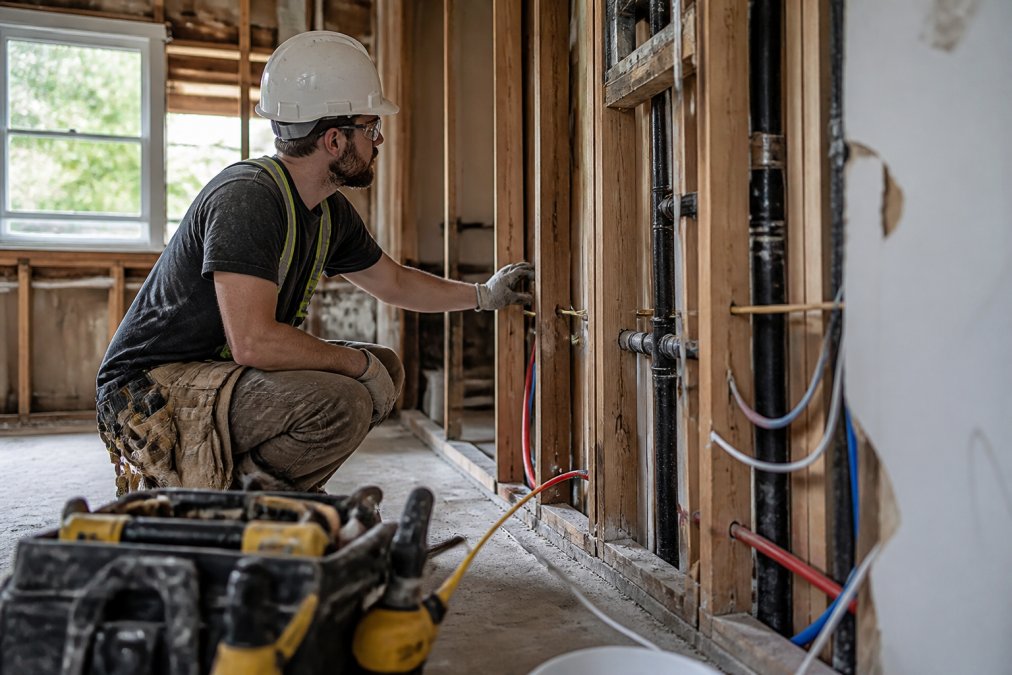
What Happens When Walls Come Down
Once walls are open, structural integrity becomes visible, and so do its problems. Rotted framing, water damage, and failing foundations are common in older homes. Each requires a professional assessment before work can continue, and each assessment is a change order.
How Material Escalation Actually Hits Your Budget
Material escalation is not a single price increase, it is the gap between the price your contractor quoted and the price you pay at delivery. If your quote was written weeks before you buy materials, that gap lands on you. Lumber, tile, and fixtures with long procurement lead times are the most exposed categories.
Labor Overhead: The Quiet Multiplier
Labor overhead is the cost that grows with time, not with scope. Subcontractor fees, overtime charges, and project oversight add cost when a project runs long. A renovation timeline that slips by two weeks can add meaningful overhead to your final bill, and the slip is often caused by the structural or material surprises above, which means the three costs compound rather than sit side by side.
Insurance Gaps and Post-Renovation Maintenance: Costs That Outlast the Project
Insurance and liability gaps are the costs nobody warns you about, and they outlast the renovation itself. Standard homeowner policies may not cover damage caused by uninsured workers, and if your contractor lacks coverage, a worksite injury or property damage claim can land on you.
Two gaps to close before work starts:
- Confirm your contractor carries both general liability and workers' compensation insurance.
- Check whether your own policy needs a temporary increase in coverage during construction.
U.S. Department of Energy home energy rebates
Frequently Asked Questions
What is the 30% rule for home renovation budgets?
The 30% rule suggests setting aside 30% of your total project budget as a contingency fund for unexpected costs. On a $50,000 kitchen remodel, that means keeping $15,000 untouched for surprises like hidden water damage, outdated wiring, or material price increases. For older homes or projects involving structural work, many contractors recommend going higher, sometimes 35% to 40%, because the odds of discovering code compliance issues or structural repairs increase significantly once walls open up.
What are the most common hidden costs in kitchen and bathroom remodels?
Hidden renovation costs in kitchens and bathrooms typically come from four sources: structural repairs discovered during demolition, permitting and inspection fees, upgraded materials when original selections are discontinued, and labor overtime when timelines slip. Bathrooms also frequently hide water damage, mold, and outdated plumbing rough-in that fails current code. Kitchens often reveal insufficient electrical panel capacity for modern appliances. A thorough pre-renovation inspection helps surface some of these, but not all, which is why a contingency fund is essential.
How do I account for unforeseen structural issues in my renovation estimate?
Start with a professional inspection before signing any contract. A licensed contractor or structural engineer can identify warning signs like sagging floors, cracked foundation walls, or previous unpermitted work. Then build your contingency fund at the higher end of the range, closer to 35% or 40%, if your home is older than 30 years or has had multiple owners. Ask your contractor to include a line item for structural repairs in the estimate, even if it starts at zero, so the category exists in your budget template from day one.
Why is it important to hire licensed and insured contractors in Greer, SC?
Hiring licensed and insured contractors in Greer protects you from financial liability if a worker is injured on your property or if substandard work causes damage later. South Carolina requires contractors to carry specific licenses for certain trades, and unlicensed work can void your homeowner's insurance coverage and create problems when you sell. Licensed contractors also pull the required permits and schedule inspections, which keeps your project code compliant. Verifying license status and insurance certificates takes minutes and prevents costly legal exposure.
What should be included in a home renovation contingency fund?
A well-built contingency fund covers change orders, material escalation, hidden damage repairs, permit fee adjustments, and temporary housing or storage if the timeline extends. It should also account for post-renovation maintenance costs like HVAC filter upgrades, new finish material care, and warranty registration. Set the fund aside in a separate account and treat it as untouchable unless a genuine unforeseen cost arises. If you finish the project without using it, that money becomes your buffer for the first year of maintenance.
How can I avoid cost overruns when working with local contractors?
Avoid cost overruns by getting a fixed-price contract with a detailed scope of work, not a time-and-materials agreement. Request a written change-order process that requires your approval before any additional work begins. Ask for a project timeline with milestones and tie payments to completion of those milestones rather than to calendar dates. Finally, verify that your contractor pulls all required permits and schedules inspections, because skipping those steps to save time often leads to expensive corrections later.