 ultimate-guide
Hiring Historic Home Restoration Contractors: 2026 Guide
Table of Contents
- Why Historic Home Restoration Demands a Specialist
- Renovation vs. Restoration: What You Are Actually Hiring For
- The Best Way to Find Local Renovation References for Older Homes
- 7 Questions to Ask Historic Restoration Contractors Before You Sign
- Verify Licensed and Insured Home Repair Greer SC Contractors
- Navigating Historic District Guidelines and Tax Credits in Greer
- Building a Post-Restoration Maintenance Plan
- Conclusion: Your Next Steps for Historic Home Restoration
- Frequently Asked Questions
Last Updated: September 5, 2026
Historic home restoration is a specialized trade requiring deep knowledge of period-appropriate materials, building science, and preservation standards. Hiring professional contractors for historic home restoration in Greer, South Carolina, demands more scrutiny than a standard renovation project. Mistakes on older homes are costly and often irreversible. A contractor who excels at modern framing may not know how to match original millwork or why lime-based mortar matters for a turn-of-the-century brick wall. This guide covers the vetting process, the questions that separate true specialists from generalists, and the local regulatory landscape in the Upstate.
Below, we show you how to evaluate credentials, verify compliance, and build a maintenance plan. But first, here is what most guides get wrong: they treat historic restoration like any other home improvement project. It is not, and hiring accordingly is the single biggest mistake owners make.
Why Historic Home Restoration Demands a Specialist
Historic home restoration is the careful process of returning a property to its original condition using period-appropriate materials and techniques. Unlike a remodel that introduces modern finishes, restoration preserves the architectural integrity that gives older homes their value and charm.
A specialist brings knowledge of heritage construction methods general contractors lack, including the building envelope, moisture management for old masonry, and sourcing architectural salvage. When hiring, look for demonstrated experience with homes built before 1950, not just a portfolio of new construction.
Incorrect material choices, such as Portland cement on soft brick or modern paints on original wood siding, can accelerate deterioration and slash resale value. A specialist also understands historic district guidelines, which a typical remodeler may never have encountered.
Renovation vs. Restoration: What You Are Actually Hiring For
Renovation and restoration are not interchangeable terms, and the distinction determines which contractor you should hire. A renovation updates a home with modern amenities, while a restoration returns the property to a specific historical period using authentic materials and techniques.
Many homeowners need a hybrid approach, restoring the exterior envelope and original millwork while renovating the kitchen for modern living. This split matters because you may need two different specialists or one firm with verifiable experience in both disciplines.
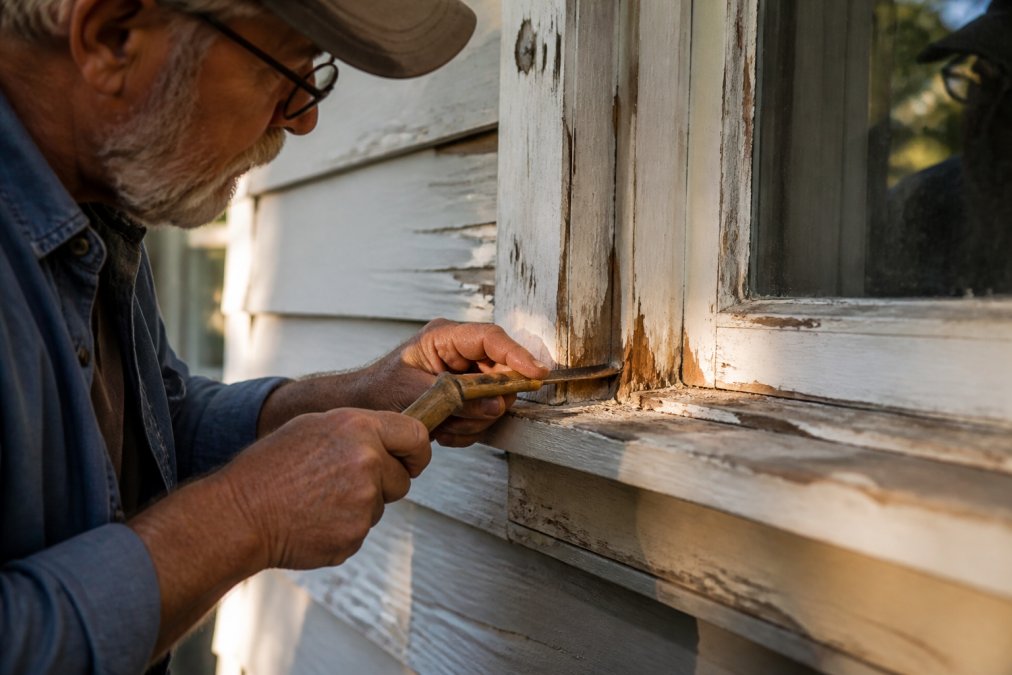
Ask yourself what the project requires. Replacing a 1920s front porch with a replica using old-growth lumber and hand-turned balusters is restoration. Adding a master suite with modern fixtures is renovation. The distinction shapes your contractor search, budget, and compliance obligations.
The Best Way to Find Local Renovation References for Older Homes
The best way to find local renovation references starts with your neighborhood, not a search engine. Drive through historic districts in Greer, look for homes undergoing similar work, and ask the owners about their experience. These homeowners have already vetted contractors and can tell you who delivered quality craftsmanship.
Local preservation societies and historic district commissions maintain lists of contractors who have completed restoration work in your area. A referral from a preservation group carries more weight than any online review because it comes with regulatory oversight attached.
Online platforms still have a role. Search for "licensed and insured home repair Greer SC" and cross-reference candidates against your local references. Look for contractors who showcase restoration projects in their portfolios, not just kitchen remodels. The National Park Service's technical preservation guidance offers detailed standards that can help you evaluate whether a contractor's past work aligns with recognized preservation practices.
7 Questions to Ask Historic Restoration Contractors Before You Sign
Asking the right questions before signing a contract is the most effective way to separate qualified specialists from generalists. The answers reveal technical knowledge and experience navigating the specific challenges of historic properties.
Schedule interviews with at least three candidates and ask each the same set of questions. Consistency makes comparison easier and exposes gaps in knowledge or experience.
Questions About Preservation Standards and Materials
Ask how the contractor approaches period-appropriate materials for your home's era. A qualified specialist should discuss specific products, sourcing strategies, and why certain materials are correct. They should reference preservation standards naturally, not as an afterthought.
Question the contractor about experience with your home's construction type. Whether you own a Victorian or a 1940s mill house, the specialist should describe similar past projects and their challenges. Vague answers about "old houses" signal a lack of depth.
The Craftsmanship Test: Vetting for Period-Appropriate Skill
Most guides stop at materials, but the real test is whether a contractor can demonstrate mastery of your home's specific architectural style. A contractor who claims to restore Victorians should explain the difference between a Queen Anne and an Italianate, and why that matters for trim profiles, window proportions, and roof pitch.
Ask the contractor to walk you through a project matching your home's style. For a Craftsman bungalow, they should discuss exposed rafter tails, tapered porch columns, and the low-pitched roof profile. For a Greek Revival, they should know the proper entablature details and why porch columns must be fluted or unfluted to match the original design.
Ask the contractor to identify your home's style and describe three architectural features that define it. A true specialist answers without hesitation; a generalist hedges or says "old" or "character home." This single question filters out more unqualified bidders than any credential check.
Ask about joinery methods. Period-appropriate restoration often requires mortise-and-tenon joints, hand-cut dovetails, or reproduction hardware matching the original manufacturer. A contractor who only knows modern pocket screws and mass-produced hinges will not deliver authentic results.
Questions About Project Management and Budget
Ask how the contractor handles unexpected discoveries, which are almost guaranteed in historic homes. Behind a wall lies rot, outdated wiring, or structural issues invisible during the initial assessment. The answer should include a clear change-order process and how cost estimation accounts for contingencies.
Ask for a detailed timeline with milestones and who will be on site daily. Many contractors bid the work but send subcontractors who lack restoration experience. You want the person who won the bid to manage the project, not disappear after the first week.
Finally, ask how they document work for historic tax credit eligibility. If you plan to claim federal or state rehabilitation tax credits, the contractor must maintain meticulous records of expenses, including material receipts, labor logs, and photographic documentation. A contractor who cannot explain this process will jeopardize your financial incentives.
Verify Licensed and Insured Home Repair Greer SC Contractors
Verifying credentials is non-negotiable, and the stakes are higher in a historic district where code compliance is closely monitored. Proper licensing and general liability insurance protect you from liability if something goes wrong on your property.
Start by confirming the contractor holds an active license with the South Carolina Department of Labor, Licensing and Regulation. You can search the South Carolina LLR license lookup to verify the license is current and check for any disciplinary actions. This step takes minutes and prevents a cascade of problems later.
Ask for a certificate of insurance directly from the contractor's provider, not a photocopy. The certificate should name your property and show active general liability coverage. For larger projects, confirm workers' compensation insurance as well, because an uninsured injury on your property can become your financial problem regardless of fault.
Navigating Historic District Guidelines and Tax Credits in Greer
Greer's historic districts operate under specific guidelines dictating permissible exterior changes. Before any work begins, you need written approval from the local historic commission, and your contractor must be willing to work within those constraints.
The Certificate of Appropriateness Process in Greer
The City of Greer's Board of Architectural Review (BAR) oversees all exterior changes to properties in designated historic districts, including window replacements, siding changes, porch alterations, and certain paint color decisions if your property is a designated landmark.
The process begins with a pre-application meeting. You or your contractor submit preliminary drawings and a written description to the City of Greer Planning Department. Staff review the submission for compliance with the Secretary of the Interior's Standards for Rehabilitation, the baseline for all BAR decisions.
After staff review, your application goes on the agenda for the next BAR meeting, which is public and typically monthly. You or your contractor must attend to answer questions about materials, methods, and preservation of historic character. The BAR may approve as submitted, approve with conditions, or deny it.
A contractor experienced with historic properties will handle this documentation as part of their service. They should know the difference between a "repair" and a "replacement" in the eyes of the BAR, since repairs often require no approval while replacements trigger full review. If a candidate seems surprised that permits or commission approval are required, that is a clear warning sign.
Documentation Requirements for Tax Credits
Financial incentives exist for qualifying work. The South Carolina Historic Preservation Office (SC SHPO) administers state and federal rehabilitation tax credit programs. For income-producing properties, the federal 20% investment tax credit can offset a substantial portion of qualified expenses, and South Carolina offers a state-level credit that can stack with it (nps.gov).
Documentation is critical. To claim these credits, you must maintain:
- A complete cost ledger that separates qualified rehabilitation expenses from non-qualified costs like new additions or landscaping
- Photographic documentation of the property's condition before work begins, during construction, and after completion
- Copies of all contracts, invoices, and receipts organized by trade and phase
- A final certification package submitted to SC SHPO that includes a description of the work and how it meets the Secretary of the Interior's Standards
Your contractor must be willing to cooperate with this documentation process. Ask whether they have experience with Part A (pre-approval) and Part B (certification of completed work) applications for the federal tax credit program. A contractor who has never navigated this process may resist the paperwork or fail to track expenses in the required format.
The Greer Advantage: Local Knowledge Matters
Greer's historic districts are smaller and less bureaucratic than those in Charleston or Columbia, so the BAR process is often faster and more collaborative. However, the BAR expects contractors to come prepared; they do not have staff to hand-hold applicants.
A local contractor who has appeared before the Greer BAR knows the commissioners' preferences, the typical review timeline, and the required level of detail. This familiarity can shave weeks off the approval process and reduce the likelihood of denial or conditional approval requiring redesign.
When interviewing, ask how many times they have appeared before the Greer BAR specifically. A contractor who has worked in other South Carolina historic districts may be competent but will face a learning curve with Greer's guidelines and commission expectations.
Building a Post-Restoration Maintenance Plan
A restoration project does not end when contractors pack up. Historic homes require ongoing maintenance that differs fundamentally from modern construction, and skipping this step undoes years of careful work. A written maintenance plan protects your investment and prevents small issues from becoming major repairs.
Your plan should address the building envelope first, since water intrusion is the primary threat to historic structures. Schedule annual inspections of the roof, gutters, and flashing, and address masonry repair needs immediately. Paint failure on historic wood siding is not cosmetic; it signals moisture problems leading to rot and structural damage.
Window restoration deserves its own maintenance schedule. Original windows are often the most architecturally significant feature of a historic home, and properly maintained they outperform modern replacements. Plan for regular glazing inspection, weatherstripping replacement, and repainting cycles that protect the wood without trapping moisture.
| Maintenance Task | Recommended Frequency | Primary Benefit |
|---|---|---|
| Roof and gutter inspection | Annually | Prevents water intrusion and structural damage |
| Exterior paint and wood check | Every 2-3 years | Protects siding and millwork from moisture |
| Window glazing and weatherstripping | Annually | Maintains energy efficiency and original fabric |
| Foundation and masonry inspection | Every 2-3 years | Catches settlement and mortar deterioration early |
Conclusion: Your Next Steps for Historic Home Restoration
Hiring the right contractor for a historic home restoration in Greer requires patience, research, and a willingness to ask hard questions. The process demands verification of credentials, a clear understanding of preservation standards, and a realistic budget that accounts for the unexpected. Rushing almost always leads to regret.
HOME MEDICS LLC brings licensed and insured expertise to historic properties across the Upstate, combining local knowledge with clear communication and on-time project completion. Our team understands the specific challenges of older homes, from period-appropriate craftsmanship to the documentation required for historic district compliance. Get a free estimate and protect your home's legacy with contractors who treat your property with the care it deserves.
Frequently Asked Questions
How much does it cost to restore a historic home?
Restoration costs vary widely based on the home's condition, square footage, and the scope of work. Factors like masonry repair, window restoration, and millwork replacement add significantly to the budget. Unlike a standard renovation, you are paying for specialized tradespeople who understand period-appropriate materials. The best approach is to get a detailed site assessment and cost estimation from a contractor who specializes in historic preservation. Request itemized quotes from multiple firms to compare fairly.
Are you allowed to renovate historic homes?
Yes, but you must follow historic district guidelines. In Greer, if your home is in a designated historic district, exterior changes that affect the building envelope or architectural integrity typically require review and approval from the local historic commission. Interior renovations are usually less restricted unless the home has specific covenants. Always check with the commission before starting work to avoid fines or being forced to undo completed changes.
What permits are required for historic home renovations in Greer, SC?
Most restoration work involving structural changes, electrical, plumbing, or significant alterations requires building permits from the City of Greer. For homes in historic districts, you will also need a Certificate of Appropriateness from the local historic commission before applying for building permits. Your contractor should handle the permitting process as part of their project management. Confirm they have experience working with local historic preservation regulations before hiring them.
How do I verify if a contractor has experience with historic restoration?
Ask for a project portfolio that includes completed historic restoration work, not just new construction or standard remodeling. Look for evidence of period-appropriate craftsmanship, such as millwork, window restoration, and masonry repair. Contact past clients and ask about the contractor's knowledge of historic preservation standards. A specialist should be able to discuss building codes, architectural integrity, and sourcing materials like architectural salvage without hesitation.
What is the difference between renovation and restoration?
Renovation updates a home for modern living, often replacing materials and changing layouts. Restoration focuses on preserving and repairing the original character, using period-appropriate materials and techniques. When hiring professional contractors for historic home restoration, you want a firm that understands this distinction. A general renovation contractor may suggest modern replacements that compromise the home's heritage, while a restoration specialist works to maintain its historical integrity.
What is the best way to find local renovation references for a historic home?
Start by contacting your local historic commission or preservation society; they keep lists of contractors who respect district guidelines. Walk the historic neighborhoods in Greer and note homes with recent restoration work, then ask the owners who did it. Verify that any contractor you consider is licensed and insured for home repair in Greer, SC, and request references from projects similar to yours.
Get started with HOME MEDICS LLC and protect your historic home with professional, insured restoration expertise.
This article was written using GrandRanker
Frequently Asked Questions
Q: How much does it cost to restore a historic home?
A: Restoration costs vary widely based on the home's condition, square footage, and the scope of work. Factors like masonry repair, window restoration, and millwork replacement add significantly to the budget. Unlike a standard renovation, you are paying for specialized tradespeople who understand period-appropriate materials. The best approach is to get a detailed site assessment and cost estimation from a contractor who specializes in historic preservation. Request itemized quotes from multiple firms to compare fairly.
Q: Are you allowed to renovate historic homes?
A: Yes, but you must follow historic district guidelines. In Greer, if your home is in a designated historic district, exterior changes that affect the building envelope or architectural integrity typically require review and approval from the local historic commission. Interior renovations are usually less restricted unless the home has specific covenants. Always check with the commission before starting work to avoid fines or being forced to undo completed changes.
Q: What permits are required for historic home renovations in Greer, SC?
A: Most restoration work involving structural changes, electrical, plumbing, or significant alterations requires building permits from the City of Greer. For homes in historic districts, you will also need a Certificate of Appropriateness from the local historic commission before applying for building permits. Your contractor should handle the permitting process as part of their project management. Confirm they have experience working with local historic preservation regulations before hiring them.
Q: How do I verify if a contractor has experience with historic restoration?
A: Ask for a project portfolio that includes completed historic restoration work, not just new construction or standard remodeling. Look for evidence of period-appropriate craftsmanship, such as millwork, window restoration, and masonry repair. Contact past clients and ask about the contractor's knowledge of historic preservation standards. A specialist should be able to discuss building codes, architectural integrity, and sourcing materials like architectural salvage without hesitation.
Q: What is the difference between renovation and restoration?
A: Renovation updates a home for modern living, often replacing materials and changing layouts. Restoration focuses on preserving and repairing the original character, using period-appropriate materials and techniques. When hiring professional contractors for historic home restoration, you want a firm that understands this distinction. A general renovation contractor may suggest modern replacements that compromise the home's heritage, while a restoration specialist works to maintain its historical integrity.
Q: What is the best way to find local renovation references for a historic home?
A: Start by contacting your local historic commission or preservation society; they keep lists of contractors who respect district guidelines. Walk the historic neighborhoods in Greer and note homes with recent restoration work, then ask the owners who did it. Verify that any contractor you consider is licensed and insured for home repair in Greer, SC, and request references from projects similar to yours.